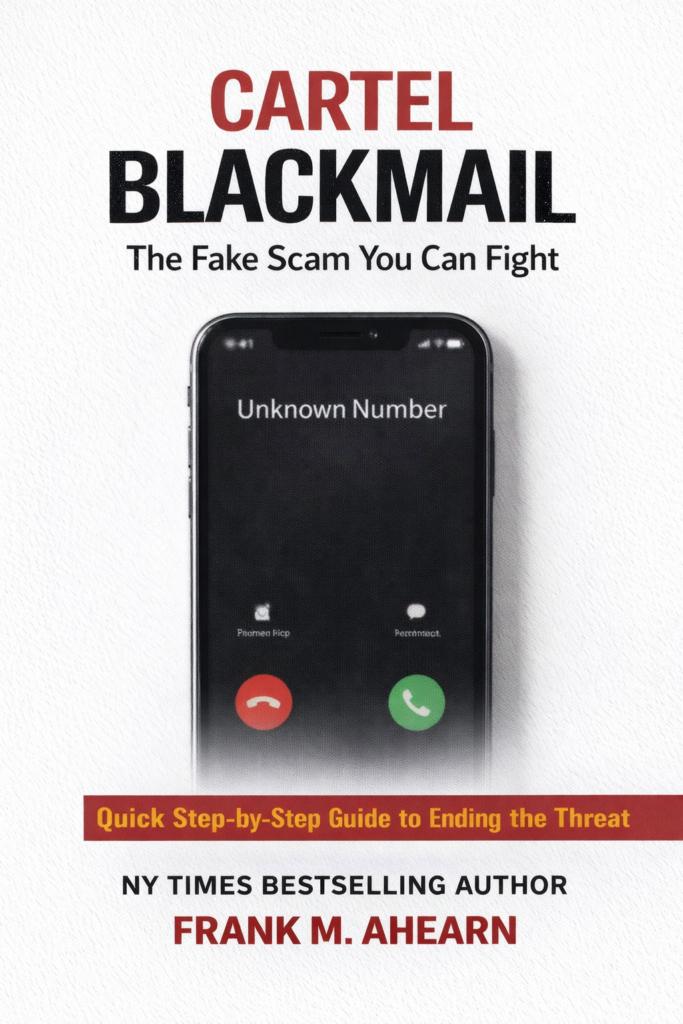
by Frank M. Ahearn
How Fake Cartel Blackmail Scams Work
Cartel blackmail often begins after someone contacts an escort or exchanges messages with a person offering sexual services. Days later, a threatening message arrives. The sender claims to represent a cartel, criminal organization, or escort agency. They accuse you of wasting someone’s time or owing money.
Now they want payment.
The scammer sends horribly violent photos, images of weapons, and threats against you or your family. They may search your mobile number in a database and obtain your name and address. When they send that personal information alongside violent threats, it freaks people out, and they pay. Some victims pay repeatedly, believing each payment will finally end the threats.
But knowing your name and address does not mean a cartel is coming after you. Much of that information can be found through databases and online searches. The scammer uses it to make the threats personal and frightening.
Cartel Blackmail Help: How to Stop Fake Cartel Threats
Cartel blackmail help starts with understanding that the person threatening you is most likely not a member of a cartel. These threats are generally scams designed to frighten you into sending money. The scammer’s greatest weapon is fear, and for many victims, it works.
I am Frank M. Ahearn, The Blackmail Fixer, a privacy expert, and New York Times bestselling author of How to Disappear. I have spent more than twenty-five years dealing with privacy problems, blackmail, and extortion threats. I know how these scammers use fear, personal information, and threats of violence to pressure victims into paying.
Most victims of fake cartel scams can ignore and block the scammer. However, for some, protecting their identity and reputation is prudent, especially when the scammer has obtained personal information. This is particularly important for people in prominent positions, high-level professionals, individuals with public online profiles, and married men who want to keep their private lives private.
Cartel Blackmail: The Fake Scam You Can Fight explains how these scams work, why victims pay, and how to protect your identity and reputation while dealing with the threat.
What’s Inside This Cartel Blackmail Survival Manual?
This short, tactical book explains how fake cartel threats work and how to avoid the mistakes that keep victims trapped.
Inside, you’ll learn:
- How to identify a fake cartel scam. Understand the messages, photographs, and threats scammers use to frighten victims.
- Why you should not send money. Paying does not guarantee the threats will stop and can lead to further demands.
- How to slow down the scam. Understand why scammers use urgency and how to avoid panic-driven decisions.
- How to handle threatening messages. Learn what to say, what not to say, and when to stop communicating.
- How to protect your identity. Understand how scammers locate personal information and use it to make threats more convincing.
- How to recognize their patterns. Fake cartel threats frequently follow similar scripts designed to create fear.
Every fake threat has a script. Every scammer has a pattern. Once you recognize what is happening, you are in a better position to protect yourself and avoid paying.
Escort Cartel Threats and Fake Cartel Extortion
Many fake cartel threats begin with an escort advertisement or adult dating website. A person contacts someone offering companionship or sexual services but never actually meets them.
Later, an aggressive message arrives claiming that the person wasted an escort’s time and now owes money to a cartel or agency.
Sometimes the sender claims to be a cartel boss. Other times, they use titles such as hitman, enforcer, or agency manager.
The threats are designed to sound violent and immediate.
Victims often believe that ignoring the message will cause the situation to escalate. That fear is exactly what the scammer wants.
Cartel Blackmail: The Fake Scam You Can Fight explains how these threats operate and why understanding the scam is more important than reacting to every message.
This Is a Fake Scam You Can Fight
You don’t need hundreds of pages of theories when someone is threatening your life. You need to understand whether the threat is real, how the scam operates, and what steps you can take to protect yourself.
This book explains the patterns behind fake cartel threats and how to avoid giving scammers the money and information they want.
The most important weapon these scammers have is your reaction. They want panic, fear, and immediate payment.
Take away those reactions, and their ability to pressure you may begin to weaken.
Read Before You Pay
If someone is claiming to represent a cartel and demanding money, don’t let panic make the next decision.
Cartel Blackmail: The Fake Scam You Can Fight — Quick Step-by-Step Guide to Ending the Threat explains the threats, the patterns, and the tactics behind this frightening scam.
You don’t need to panic.
You don’t need to pay simply because someone sends a frightening message.
You need to understand what you’re facing.
Learn how to recognize the scam, protect your identity, and avoid becoming another paying victim.
Buy Cartel Blackmail: The Fake Scam You Can Fight on Amazon
Amazon USA | Amazon UK | Amazon Australia | Amazon Canada | Amazon Sweden
About Frank M. Ahearn
Frank M. Ahearn is a privacy expert, The Blackmail Fixer, and New York Times bestselling author of How to Disappear. He began his career as a skip tracer and social engineer, locating people who did not want to be found. Eventually, he moved into extreme privacy, helping people disappear and protect their identities.
Over the years, Frank expanded his work into romance scams and blackmail, handling more than a thousand cases involving threats of exposure, secret relationships, and online predators. His books are based on real cases and the tactics he has used throughout his career.
Contact Frank: FA@FrankAhearn.com
If this book does not address your particular situation, explore his other Blackmail Help Books, including manuals covering sextortion, Grindr blackmail, Ashley Madison, and blackmail against women.